- Aug 15, 2024
The Miter Jack
- Norman Pirollo
At a recent woodworking event, I perused the vintage tool dealers and came across a couple of antique Miter Jack Vises. This was a French development of the 19th century and the purpose was to clamp ends of boards to create consistent joinery. The Miter Jacks incorporated versatility to create either 45d joints or 90d joints. This was accomplished by flipping the Miter Jack over and using the other surfaces of the jaw in the clamp. The Miter Jack also excels at creating 45d case miters along the end of a board. This joint is often used in boxes and case construction. I had always been intrigued by this device as it never really took off in N. America. Therefore, relatively few specimens exist to this day. There were (2) at the woodworking event, reasonably priced although in need of some restoration to function a little better. Without giving much thought, I purchased them and spent a few days both restoring them and becoming acquainted with their nuances. There was a learning curve, but the time spent was enjoyable and added to my skill set!
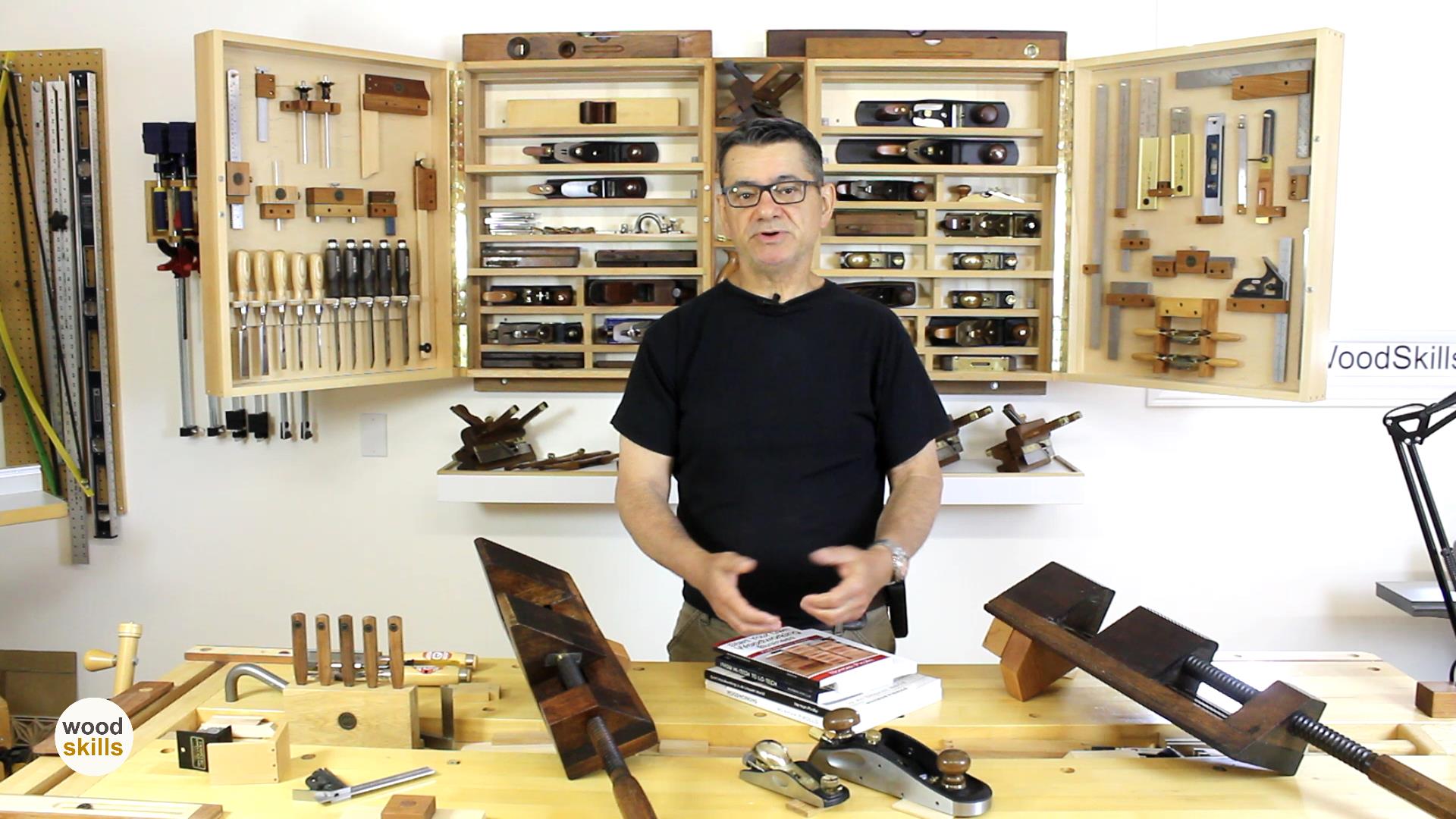
The (2) antique Miter Jacks. The larger one (right) has an Acme-threaded wood screw.
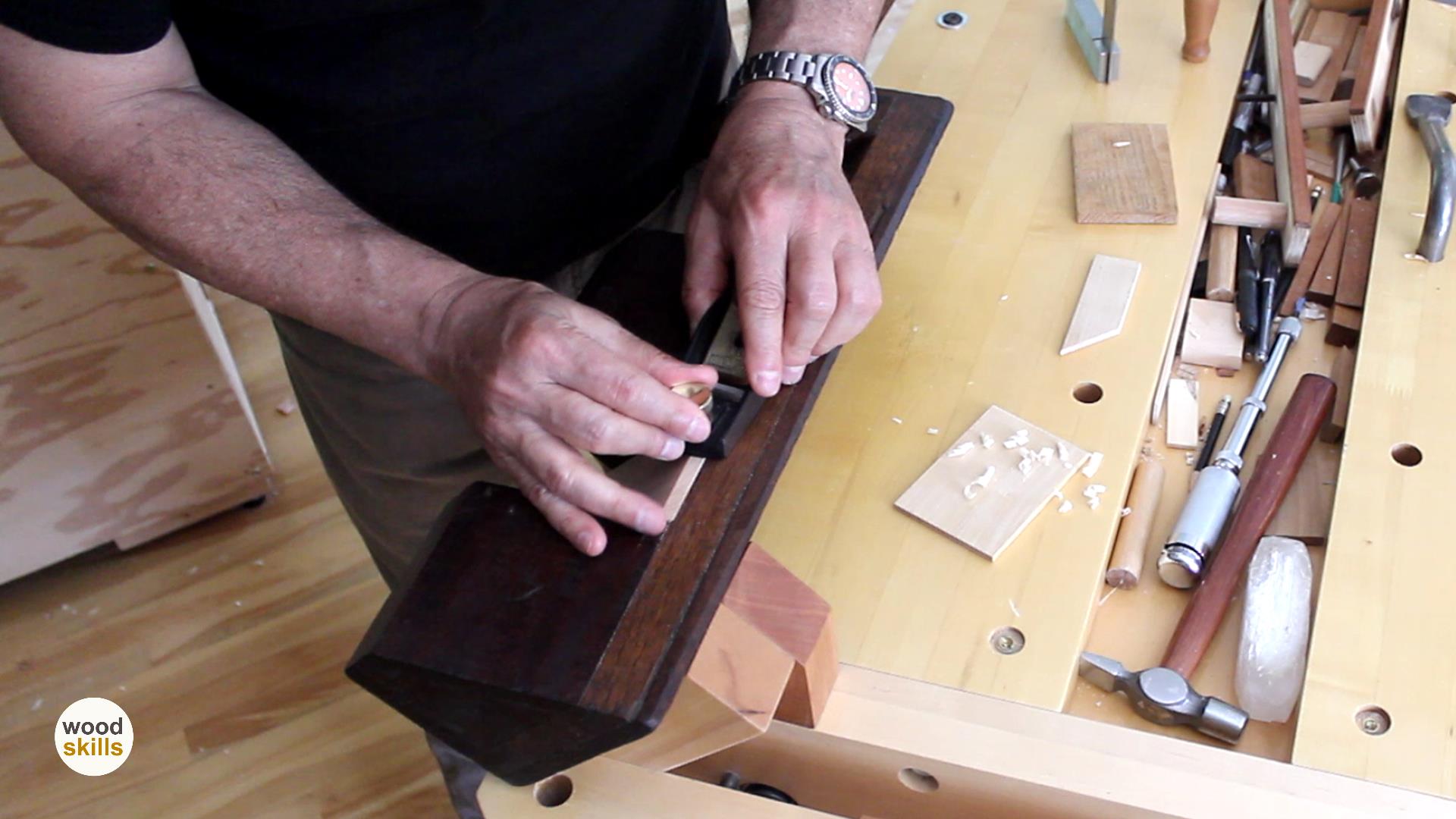
Creating a small case miter using a block plane. Low-angle bevel up planes excel at this task. New keel with plug-in block can be seen, this allows horizontal orientation of the Miter Jack.
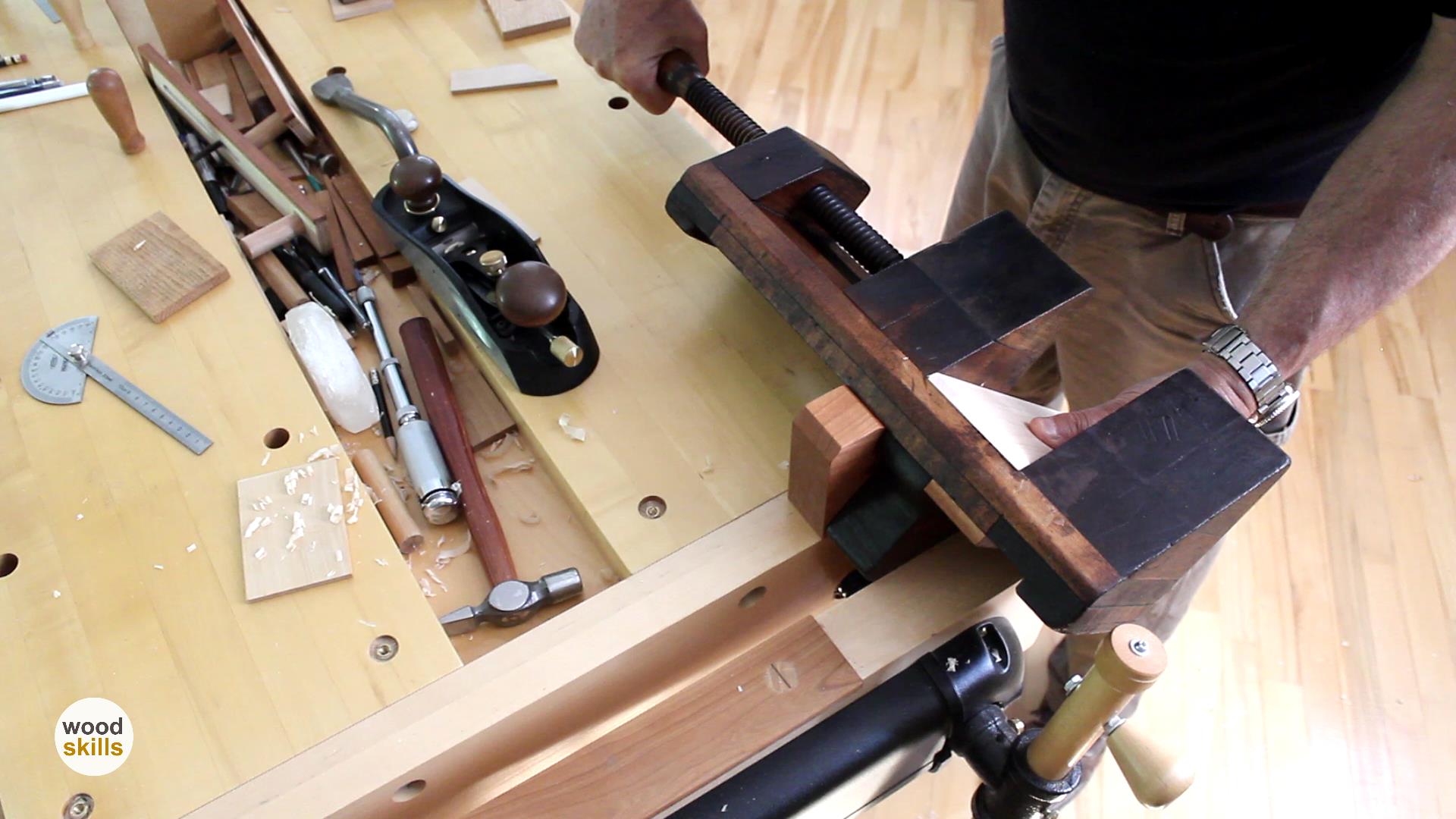
In the process, I created some plug-in attachments to better orient the Miter Jacks. A new keel and plug-in attachment would serve to better orient the Miter Jack so I could work horizontally even though I am creating a 45d joint. Orienting and correctly clamping the Miter Jack was an important criteria in the design of the keel and plug-in attachment. The premise of the Miter jack is to create consistent tenon shoulders, either 2 or 4, while the board is clamped in the Miter Jack jaws. This eliminates the problem of needing to tune tenon shoulders so they are consistent in a joint. The Miter Jack jaws serve as an accurate reference surface for the next step. This involves a Miter Jack saw and I will delve into this in my next blog post.
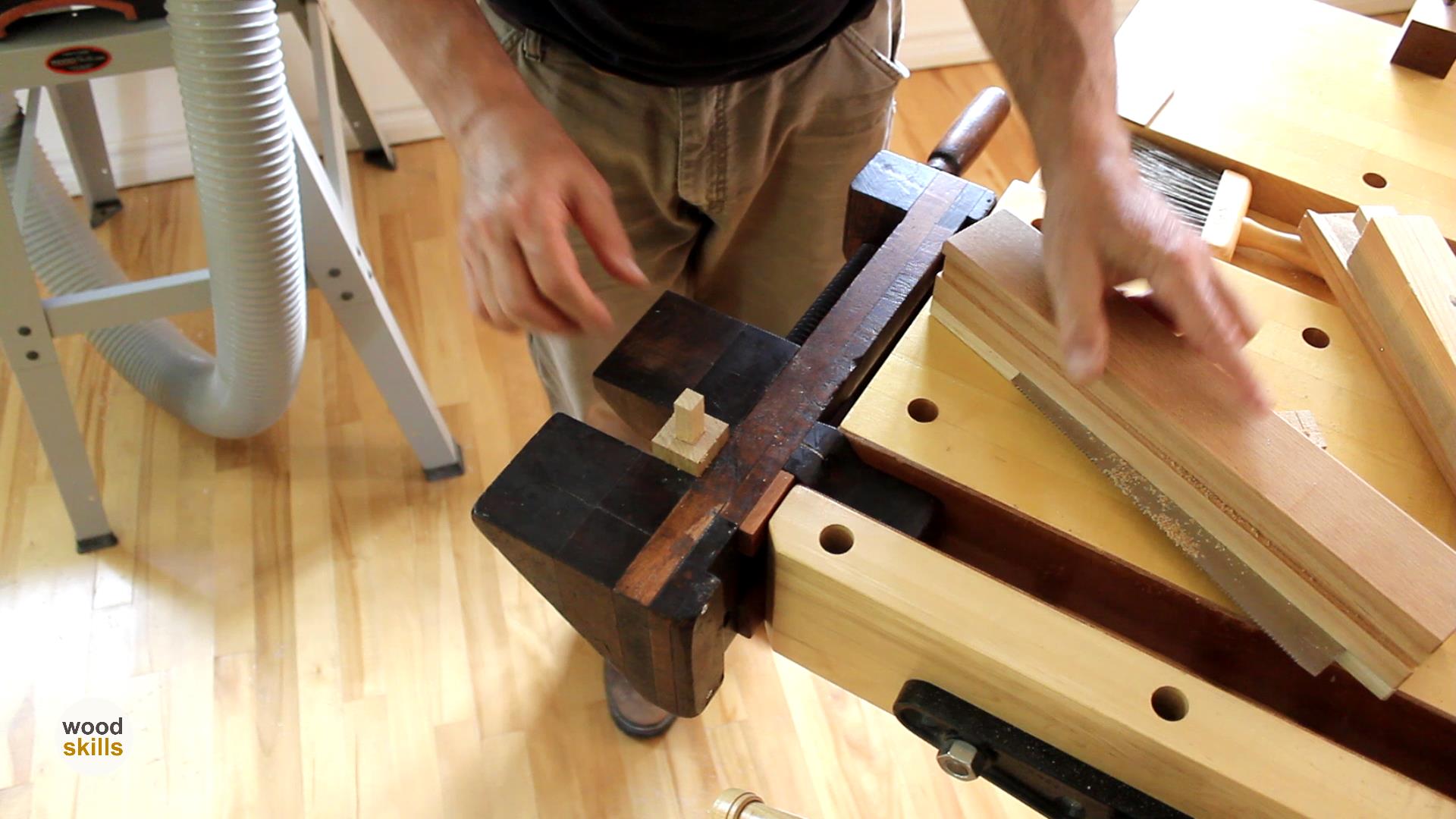
Completed (4) shoulder square tenon using 90d sides of the Miter Jack jaws. The tenon is raised from the surface an equivalent height of the Miter Jack Saw spacer block. Shoulders are sawn uniformly since component is not moved in the jaws.
Author, Copyright: Norman Pirollo (WoodSkills)
WoodSkills Courses + Plans
- $40
Hand Tool Case
- Course
- 16 Lessons
- Includes 1 additional product
- $50
Tea Cabinet Course
- Course
- 56 Lessons
- Includes 1 additional product
- $40
Woodworking Course
- Course
- 55 Lessons
- Includes 1 additional product
- $40
Furniture Design Course
- Course
- 26 Lessons
- Includes 1 additional product
- $40
Kumiko: Learn Japanese Woodworking
- Course
- 23 Lessons
- Includes 1 additional product
- $40
Hand Tool Class
- Course
- 48 Lessons
- Includes 2 additional products